

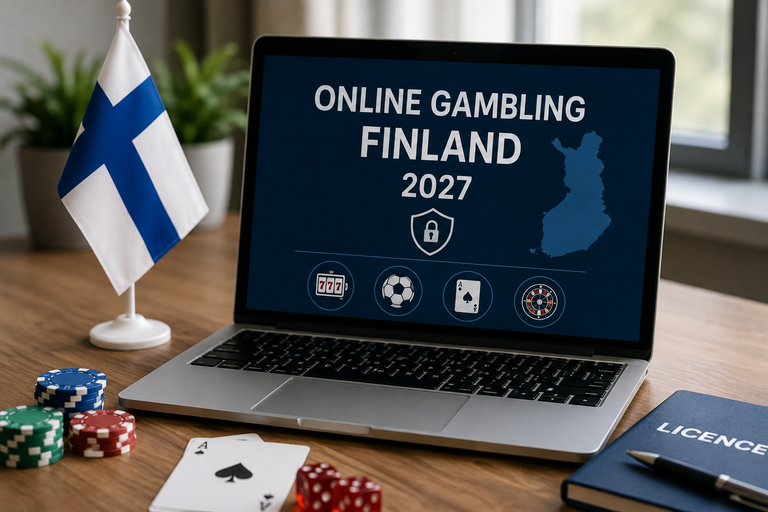
Finland is preparing for one of the most significant changes in its gambling industry in decades. After years of operating under a state-controlled monopoly, the country is moving toward a licensing model that will allow private gambling companies to enter parts of the Finnish market.
For international operators, this creates a major new opportunity in the Nordic iGaming sector. However, entering Finland will require considerably more than translating an existing casino or sportsbook into Finnish.
The new framework introduces licensing requirements, player protection measures, technical supervision, marketing restrictions and ongoing compliance obligations that operators will need to address well before launch.
The most important date is 1 July 2027, when licensed private operators will be permitted to provide and market certain gambling products in Finland. Licence applications have already been accepted since March 2026, making the preparation period particularly important for companies hoping to enter the market from day one.
Finland Is Moving Away From Its Traditional Gambling Monopoly
For decades, Finland has relied on a monopoly-based gambling system dominated by the state-owned operator Veikkaus. The new Gambling Act changes this structure by opening several important verticals to licensed competition.
Under the new system, private operators will be able to apply for licences covering products such as:
- online casino games;
- online slot games;
- betting;
- certain other online gambling products;
- online money bingo.
Veikkaus will nevertheless continue to hold exclusive rights over several areas, including lottery-type games, scratch cards and certain land-based gambling activities. Finland is therefore not moving toward a completely open gambling market, but rather toward a hybrid model combining competition with continued state exclusivity.
The reform reflects a broader trend already seen across the Nordic region, where licensing systems have increasingly replaced or supplemented traditional monopoly structures.
Why Is Finland Opening Its Online Gambling Market?
One of the main objectives behind the reform is improving the country’s gambling channelisation rate.
A significant number of Finnish consumers already use gambling websites operated outside the existing monopoly system. By allowing international companies to obtain Finnish licences, regulators hope to direct more gambling activity toward locally regulated and supervised platforms.
At the same time, the government intends to strengthen consumer protection and reduce gambling-related harm.
The challenge for regulators is therefore clear: Finland needs to create a market attractive enough for reputable operators to obtain licences while maintaining strict rules around player safety, advertising and responsible gambling.
The Finnish Gambling Licence: What Operators Should Know
Operators planning to enter Finland must obtain an appropriate gambling licence.
Applications for gambling licences became possible on 1 March 2026. During the transitional period, applications are handled by Finland’s National Police Board. Regulatory responsibility will transfer to the Finnish Supervisory Agency when the new system becomes operational in July 2027.
For 2026, the application fee for a gambling licence is €29,000. This fee is charged for each application regardless of whether the licence is eventually granted.
A gambling licence can be granted for up to five years, and there is no predetermined limit on the number of private gambling licences that can be issued.
Operators should therefore view Finland as a competitive regulated market rather than a concession-based system limited to a small number of licence holders.
Applying Early Could Be Critical
Companies targeting a July 2027 launch should avoid treating licensing as a last-minute administrative task.
Finnish authorities currently indicate a target processing period of approximately six months, although incomplete documentation or complex applications may increase that timeframe.
Obtaining the licence is also not the final step.
Before operations can begin, successful applicants must complete the required audits and integrate their systems with the Finnish regulatory supervision infrastructure. Connection to the supervisory authority’s interfaces is mandatory.
For operators, this means the launch roadmap should include several parallel workstreams:
- licence documentation;
- corporate and ownership checks;
- technical integration;
- compliance processes;
- responsible gambling systems;
- marketing preparation;
- localisation;
- supplier management.
Waiting until 2027 to begin this work could make a day-one market entry difficult.
Strong Player Identification Will Be Central
Player identification will play an important role in Finland’s new regulatory environment.
The legal gambling age will remain 18, while registration will require strong identification to verify the player’s identity and age.
Mandatory identification is also closely connected to Finland’s responsible gambling framework. It allows gambling behaviour to be linked to individual accounts and enables tools such as spending controls, self-exclusion and gambling monitoring.
Operators entering Finland will therefore need reliable onboarding systems capable of meeting local identity and compliance requirements without creating unnecessary friction for legitimate customers.
A poorly designed verification process could significantly affect acquisition and conversion rates, particularly in a market where local consumers are accustomed to efficient Nordic digital services.
Responsible Gambling Cannot Be Treated as a Checkbox
Player protection is one of the central pillars of the Finnish reform.
Licensed operators will be expected to monitor gambling behaviour continuously and identify situations where a customer’s gambling patterns indicate an increased risk of harm.
The duty of care may require operators to intervene when gambling behaviour becomes clearly more harmful. Relevant indicators can include factors such as gambling frequency, time spent gambling and money spent.
Players must also be provided with tools allowing them to control their activity.
The new system includes mechanisms for self-exclusion and player-specific restrictions, while operators will need internal processes for detecting and responding to risky behaviour.
For international brands, this could require adapting existing responsible gambling models rather than simply transferring procedures used under another European licence.
Centralised Self-Exclusion Will Change Player Management
Another important element of the new Finnish framework is centralised self-exclusion.
Players will be able to restrict their access to gambling across licensed operators through a central system. Operators must also provide options for customers to exclude themselves from particular games or categories.
Account-based gambling will additionally involve transfer limits, with players required to establish daily and monthly limits on money transferred to their gambling accounts.
This creates both technical and operational requirements.
CRM, payments, responsible gambling and customer support systems will need to communicate effectively so restrictions are enforced consistently throughout the customer journey.
Marketing Will Be Possible — But Heavily Regulated
The ability to advertise legally is likely to be one of the biggest attractions of the new Finnish licensing system.
Until 30 June 2027, Veikkaus remains the only operator permitted to market gambling services in mainland Finland. Licensed competitors must therefore avoid prematurely targeting Finnish consumers before the new regime takes effect.
From July 2027, licensed operators will gain access to selected advertising channels.
Permitted marketing can include channels such as television, radio, newspapers and operators’ own websites. Licensed operators will also be able to use their own social media accounts subject to restrictions.
However, the system is far from unrestricted.
Among the important limitations are prohibitions or restrictions concerning:
- influencer marketing;
- telephone direct marketing;
- advertising targeted at minors;
- the use of minors in gambling advertisements;
- marketing around events primarily intended for minors;
- certain forms of outdoor advertising;
- sponsorship involving under-18s.
Marketing generally must also communicate responsible gambling information, the legal age requirement and regulatory information.
Operators accustomed to aggressive acquisition strategies will therefore need a Finland-specific marketing model.
Influencer Marketing Is a Particular Risk Area
Affiliate and influencer strategies deserve special attention.
Social media personalities have become an important acquisition channel for gambling operators in many markets. Finland’s new framework, however, explicitly prohibits influencer marketing of gambling.
This means operators cannot simply reproduce strategies used in markets where streamers, content creators or social media personalities directly promote casino brands.
Affiliate structures, brand partnerships and social campaigns will need careful legal review before launch.
The distinction between editorial content, affiliate activity and prohibited promotion may become especially important as regulators establish enforcement practice after the market opens.
Localisation Will Matter More Than Translation
The regulatory framework may provide access to Finland, but obtaining a licence alone will not guarantee commercial success.
Finland has a digitally sophisticated consumer base and a relatively mature gambling market. New entrants will compete not only against each other but also against Veikkaus, which benefits from extremely high local brand recognition.
Operators should therefore invest in genuine localisation.
That includes Finnish-language customer support, local payment expectations, mobile-first design, clear responsible gambling tools and marketing campaigns designed specifically for Finnish users.
Simply translating an international casino interface is unlikely to create sufficient differentiation.
Successful operators will need to understand local preferences in online casino games, slot games, live casino products and sports betting, while building trust around payments, withdrawals and customer protection.
Payment and KYC Infrastructure Should Be Prepared Early
Payments are another area where early preparation could provide a competitive advantage.
Operators need systems that can work smoothly alongside strong identification requirements, anti-money laundering controls, responsible gambling limits and regulatory reporting.
The objective should be a customer journey where compliance requirements remain robust without unnecessarily complicating deposits and withdrawals.
Automated KYC processes, clear source-of-funds procedures and reliable transaction monitoring could therefore become important components of Finnish market readiness.
Operators should also ensure that payment-related responsible gambling restrictions are integrated across all platforms rather than treated as separate compliance functions.
Software Suppliers Will Also Enter the Licensing Framework
The Finnish reform does not affect only B2C casino and betting companies.
A separate gambling software licensing regime will become increasingly important for B2B providers.
Applications for gambling software licences are expected to become possible from 1 July 2027. From 1 July 2028, operators holding gambling licences will generally be required to use gambling software supplied by appropriately licensed providers.
This gives platform providers, aggregators, game studios and other B2B companies additional time to prepare, but operators should already review their supplier ecosystems.
Supplier selection decisions made before launch could have long-term compliance consequences once the software licensing requirement becomes fully effective.
Compliance Continues After the Licence Is Granted
Receiving a licence will not end an operator’s regulatory responsibilities.
Finnish licence holders will have continuing reporting and supervisory obligations. These include annual reporting covering areas such as financial statements, marketing, gambling operations, suspicious betting, responsible gambling and self-monitoring.
Operators must also report material changes relating to their licence.
In serious or repeated cases of non-compliance, authorities may intervene in gambling operations and ultimately revoke a licence.
Compliance teams should therefore prepare Finland as a permanent regulatory workstream rather than a one-time market entry project.
What Operators Should Do Before 2027
The companies best positioned for Finland’s market opening will likely be those that treat 2026 and early 2027 as an implementation period rather than simply waiting for the official launch date.
A practical preparation strategy should include:
- Start the licensing process early.
Prepare ownership, corporate, financial and operational documentation well ahead of the intended launch. - Review technical requirements.
Plan regulatory integrations, auditing and reporting infrastructure. - Build a Finland-specific responsible gambling model.
Ensure monitoring, limits and exclusion tools satisfy local requirements. - Audit marketing strategies.
Remove acquisition methods that will not comply with Finnish restrictions, particularly influencer-based promotion. - Review software suppliers.
Confirm that critical technology partners have a roadmap for Finland’s B2B licensing requirements. - Localise the product.
Finnish language, customer service, payments and user experience should be treated as strategic priorities. - Prepare compliance reporting processes.
Establish responsibility for regulatory reporting, marketing records, player protection and operational monitoring.
A Major Opportunity in the Nordic iGaming Market
Finland’s gambling reform represents more than the introduction of another European licence.
It marks the transition of a long-standing monopoly market into a regulated competitive environment and gives international operators a rare opportunity to establish themselves in a sophisticated Nordic gambling market.
Competition will almost certainly be intense.
Major international operators, established Nordic brands and Veikkaus itself are all likely to compete for Finnish players. Licence holders will also operate within a framework that places significant emphasis on responsible gambling, controlled marketing and regulatory transparency.
For operators willing to prepare early, Finland could nevertheless become one of Europe’s most interesting regulated iGaming markets of the coming years.
The key is not simply being licensed by July 2027.
It is being technically, commercially and operationally ready when the market opens.







Robert Anderson
A very interesting look at Finland’s upcoming transition to a regulated online gambling market. The July 2027 launch creates a significant opportunity for international operators, but the article makes it clear that obtaining a licence will only be the beginning. Strong compliance, responsible gambling measures, localised services and reliable technical infrastructure will be essential for operators that want to compete successfully. It will be interesting to see which brands are best prepared when the new market officially opens.