

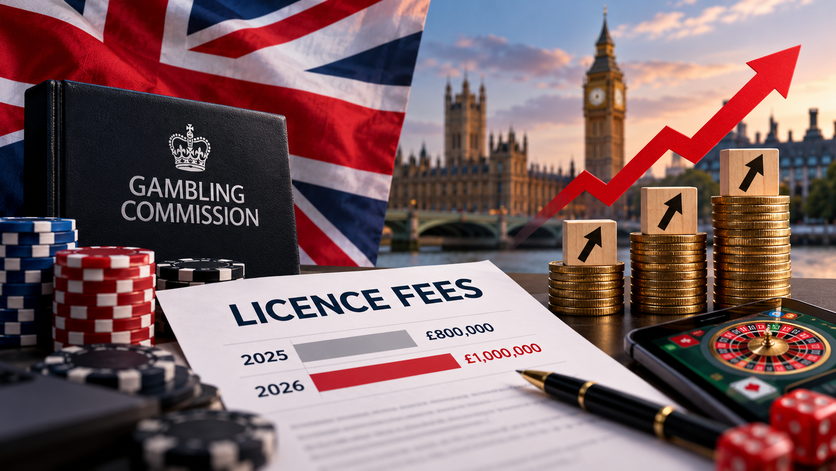
UK Gambling Licence Fees Are Increasing: What It Means for iGaming Operators
Operating in one of the world’s most established regulated gambling markets has never been cheap. From compliance teams and technical standards to responsible gambling systems and regulatory reporting, the cost of doing business in Great Britain already extends far beyond the price of a licence. As of 1 October 2026, that price has increased again. The UK Gambling Commission’s revised fee structure is now in force, following a government review of how gambling regulation should be funded. Across the system, licence fees are increasing by approximately 25% overall, although that figure should not be mistaken for a flat 25% rise for every operator or every licence category. The actual changes vary considerably depending on the type of licence, annual gross gambling yield and the operator’s position within the new fee bands. For iGaming businesses, this is more than another regulatory invoice. The changes affect market-entry calculations, operating margins, compliance budgets and, potentially, the economics of serving British players at all.Why Has the UK Increased Gambling Licence Fees?
The fee increase is part of a broader attempt to ensure that the Gambling Commission has enough resources to regulate an industry that has changed dramatically since the previous funding structure was designed. The Department for Culture, Media and Sport reviewed the Commission’s funding following commitments contained in the UK government’s gambling reform programme. The underlying argument is relatively straightforward: regulating modern gambling has become more complex. Online gambling businesses now operate at enormous scale. Regulators must deal with areas including financial crime, customer protection, digital advertising, gambling software, data, affordability-related risks and an illegal market that does not necessarily respect national borders. The Gambling Commission said the revised structure provides greater certainty over its income and resources for the coming years. The final decision produces an overall increase of 25% in licence fees, but the increase is distributed differently between products and licence categories. This distinction matters. An operator should not simply take its previous annual fee, add 25% and assume that is its new liability. Changes to category structures and the weighting applied to different gambling activities mean the impact has to be assessed licence by licence.The New UK Gambling Licence Fees Took Effect on 1 October 2026
The revised fees became effective on 1 October 2026. Alongside the higher charges, the Gambling Commission has introduced new or adjusted fee categories for many operating licences. The regulator has indicated that operators’ 2025–2026 regulatory return data is being used to establish where businesses fit within the revised structure. For businesses already licensed in Great Britain, that makes accurate regulatory reporting even more commercially significant. Gross gambling yield is no longer merely a figure relevant to financial reporting. It can directly determine where an operator falls in the licensing structure and therefore how much it pays to remain in the market. There are some exceptions to the general increase. Society lottery fees, for example, have been maintained at their existing levels. Personal licence fees, meanwhile, have increased by a flat 25%.What Do Remote Casino Operators Pay Now?
The numbers become more interesting when looking at the remote casino sector. Under the fee schedule effective from October 2026, a remote casino operating licence is divided into bands based on annual gross gambling yield. Current annual fees include:| Annual gross gambling yield | Annual licence fee |
|---|---|
| Less than £250,000 | £7,000 |
| £250,000–£875,000 | £12,375 |
| £875,000–£3 million | £19,569 |
| £3 million–£10.5 million | £27,337 |
| £10.5 million–£36.75 million | £51,975 |
| £36.75 million–£130 million | £112,556 |
| £130 million–£455 million | £394,875 |
| £455 million–£1.6 billion | £1,181,625 |
| £1.6 billion or more | £1,453,949 + £272,324 per complete additional £200m GGY |
Combined Licences Add Another Layer of Cost
Many gambling groups do not fit neatly into a single product category. An operator may run casino games alongside bingo or virtual-event betting, for example. In such cases, additional charges can apply. For remote licences combining two of remote casino, bingo and virtual-event betting activities, the current additional annual fee is £6,250. A licence combining all three attracts an additional £12,500 annual charge. Individually, these amounts may not transform the economics of a major gambling group. But they illustrate why operators should consider the entire regulatory footprint rather than focusing only on one headline licensing fee. A large iGaming group may hold operating licences, software licences and other regulatory permissions simultaneously. When those expenses are combined with compliance staff, legal advice, technical certification, responsible gambling tools, AML controls and taxes, regulatory expenditure becomes a significant operating cost.Software Suppliers Are Affected Too
The changes are not limited to consumer-facing casino brands. Companies supplying gambling software into the regulated British market also need to examine the revised fee structure. A remote gambling software licence now carries annual fees ranging from £7,394 for the lowest relevant GGY category to £191,880 for businesses generating £130 million or more. Application fees range from £7,212 to £99,446, depending on the category. That matters because the modern iGaming ecosystem depends on much more than operators themselves. Game studios, platform developers, aggregators and technology suppliers form part of the regulated supply chain. An increase in licensing and compliance expenditure at the B2B level can therefore have consequences further downstream. Suppliers may absorb higher costs, adjust commercial agreements or become more selective about the regulated markets they enter.Smaller Operators May Feel the Increase More Than the Biggest Groups
In pure pound terms, the largest operators face the biggest bills. Commercially, however, smaller businesses may feel regulatory cost increases more sharply. A large gambling group can spread compliance expenditure across millions of customers, multiple brands and several regulated markets. A smaller challenger cannot necessarily do the same. Licence fees are also only one component of the cost of entering Great Britain. A prospective operator must budget for compliance personnel, legal work, technical infrastructure, customer verification, payment controls, responsible gambling processes, reporting, data protection and ongoing regulatory oversight. That changes the calculation for companies asking a fairly basic question: is entering the UK market still worth it? Great Britain remains a valuable and mature online gambling market. But regulatory access comes with a meaningful fixed cost before an operator spends anything significant on customer acquisition. For smaller brands, that raises the importance of scale.Higher Regulatory Costs Could Strengthen the Case for Consolidation
The fee changes arrive at an interesting time for the wider gambling sector. Across the iGaming industry, scale is becoming increasingly valuable. Operators are using acquisitions and mergers to gain technology, licences, customers and access to regulated markets. CasinoPress has already examined how 2026 is becoming a major year for iGaming deals, with regulatory complexity and the cost of operating across multiple jurisdictions forming part of the commercial backdrop. Higher regulatory expenditure does not automatically cause consolidation, of course. A successful niche operator can still compete without becoming part of a multinational group. But increasing fixed costs generally favour businesses that can spread those costs across larger revenue bases. The UK fee increase therefore adds another small piece to a much larger industry trend: regulated-market access is valuable, but maintaining that access requires capital.Britain Is Not Alone in Making Regulated Market Entry Expensive
The UK changes also make more sense when viewed in an international context. Across Europe, governments are redesigning online gambling markets while simultaneously demanding more from licensed operators. Finland, for example, is preparing to replace parts of its long-standing gambling monopoly with a licensing system that will allow private operators to enter the market. Companies interested in that opportunity will have to prepare for licensing, technical supervision and continuing compliance obligations. CasinoPress has covered the transition in detail in its guide to Finland’s new online gambling market and what operators need to know before 2027. Austria is moving in another direction but faces a similar question: how can a government open a gambling market while maintaining strict regulatory control? Its proposed multi-licence framework combines market access with significant tax, capital and compliance requirements. See CasinoPress’s analysis of Austria’s move toward an open gambling licensing model. These markets differ considerably from Britain, but the broader pattern is hard to miss. European iGaming is becoming increasingly regulated rather than simply more open.The Real Cost Is Bigger Than the Licence Fee
It is tempting to look at the new UKGC tables and reduce the issue to a percentage increase. That misses the bigger point. A gambling licence is not a subscription that gives a company permission to operate and then leaves it alone. Holding the licence creates continuing obligations. Licensed operators must maintain systems and procedures capable of satisfying the Commission’s regulatory expectations throughout the life of the business. That means regulatory costs have two sides. The first is visible and predictable: application fees and annual licensing fees. The second is operational and far harder to quantify. It includes compliance teams, monitoring systems, audits, legal advice, technical development, reporting processes and management time. For established operators, the annual licensing fee may still represent only a relatively small percentage of overall expenditure. For a new market entrant, however, all of these costs arrive before the business has proven that it can acquire British customers profitably. That makes market-entry planning increasingly important.Operators Should Review Their Fee Categories Carefully
The immediate task for licensed businesses is relatively practical: understand exactly where the company sits under the new framework. The Gambling Commission has encouraged operators to review the revised categories, particularly because the overall 25% increase is not distributed equally across every operating licence. Operators should review:- their current operating and software licences;
- the relevant GGY category for each licence;
- 2025–2026 regulatory return information;
- annual renewal dates;
- combined or linked licence arrangements;
- projected GGY growth;
- application and variation costs for planned expansion.
First Annual Fees Still Receive a Reduction
There is at least one detail that new licence holders should keep in mind. For many operating licences, the first annual fee is payable 30 days after the licence is issued and is reduced by 25%. After that, the full annual fee becomes payable each year ahead of the anniversary of the licence being issued. This does not remove the broader increase, but it affects the timing of cash requirements for a newly licensed business. Operators preparing financial forecasts should therefore distinguish between application fees, the first annual payment and subsequent full annual fees rather than treating licensing as one single upfront expense.Could Higher Fees Push Operators Away From the UK?
For major international gambling companies, probably not on their own. The UK remains too significant a regulated gambling market for a licence fee increase alone to force most large operators to leave. The calculation becomes more difficult for smaller companies. When margins are thin, customer acquisition is expensive and compliance demands continue to grow, every additional fixed cost matters. Some businesses may decide that Britain remains attractive despite the higher expense. Others could prioritise jurisdictions where licensing costs are lower or growth prospects appear stronger. There is also a strategic question around product portfolios. Companies may become less willing to maintain marginal brands or licences that generate limited revenue when each additional regulated activity comes with its own cost. The result may not be a dramatic exodus. More likely, operators will become increasingly selective about where and how they deploy capital.Regulation Is Becoming a Competitive Factor
For years, gambling regulation was often discussed as something separate from commercial strategy. That distinction is becoming harder to maintain. Licensing costs affect margins. Compliance requirements influence technology investment. Tax rates affect promotional economics. Advertising restrictions change acquisition strategies. Responsible gambling rules influence product design and customer management. Regulation is therefore becoming part of the competitive environment itself. Companies with efficient compliance infrastructure may gain an advantage because they can enter and maintain regulated markets more economically than competitors that need to rebuild systems for each jurisdiction. The same logic applies to suppliers. Technology platforms that can support multiple regulatory regimes from a common infrastructure become increasingly attractive as operators expand across Europe and beyond.What Happens Next?
The October 2026 fee increase gives the Gambling Commission a larger and more predictable funding base, but it is unlikely to be the final word on how British gambling regulation is financed. The government has already discussed the possibility of a future framework that could eventually give the Commission greater control over setting its own fees, although such a change would require primary legislation. For now, operators have a concrete set of numbers to work with. And those numbers make one thing clear: access to the British gambling market is becoming more expensive. For the largest groups, the additional cost may be manageable within existing compliance budgets. For smaller operators and new entrants, it deserves far more attention. The licence itself may only be one line in the budget, but it is part of a wider shift toward a gambling market where regulatory capability is becoming just as important as marketing, games and technology. For iGaming businesses planning their next move, the question is therefore no longer simply whether the UK market offers enough revenue. It is whether that revenue still justifies the increasing cost of staying regulated.

Collaboration Breakdown
Emily Carter
87%










Leave a Reply